Build one.

Everything on this page is something you can actually do. There is no kit to order and no account to create. You buy off-the-shelf parts, follow the guide, and end up with a sensor node that delivers encrypted readings to a spreadsheet you own. Start at the bench and work outward from there.

⚠ Mycelium is in beta. The first two tiers are documented from builds that exist and run today. The field tier only gets published once the field hardware has survived real weather.

Tier 1

The bench leaf

~$176 · one afternoon
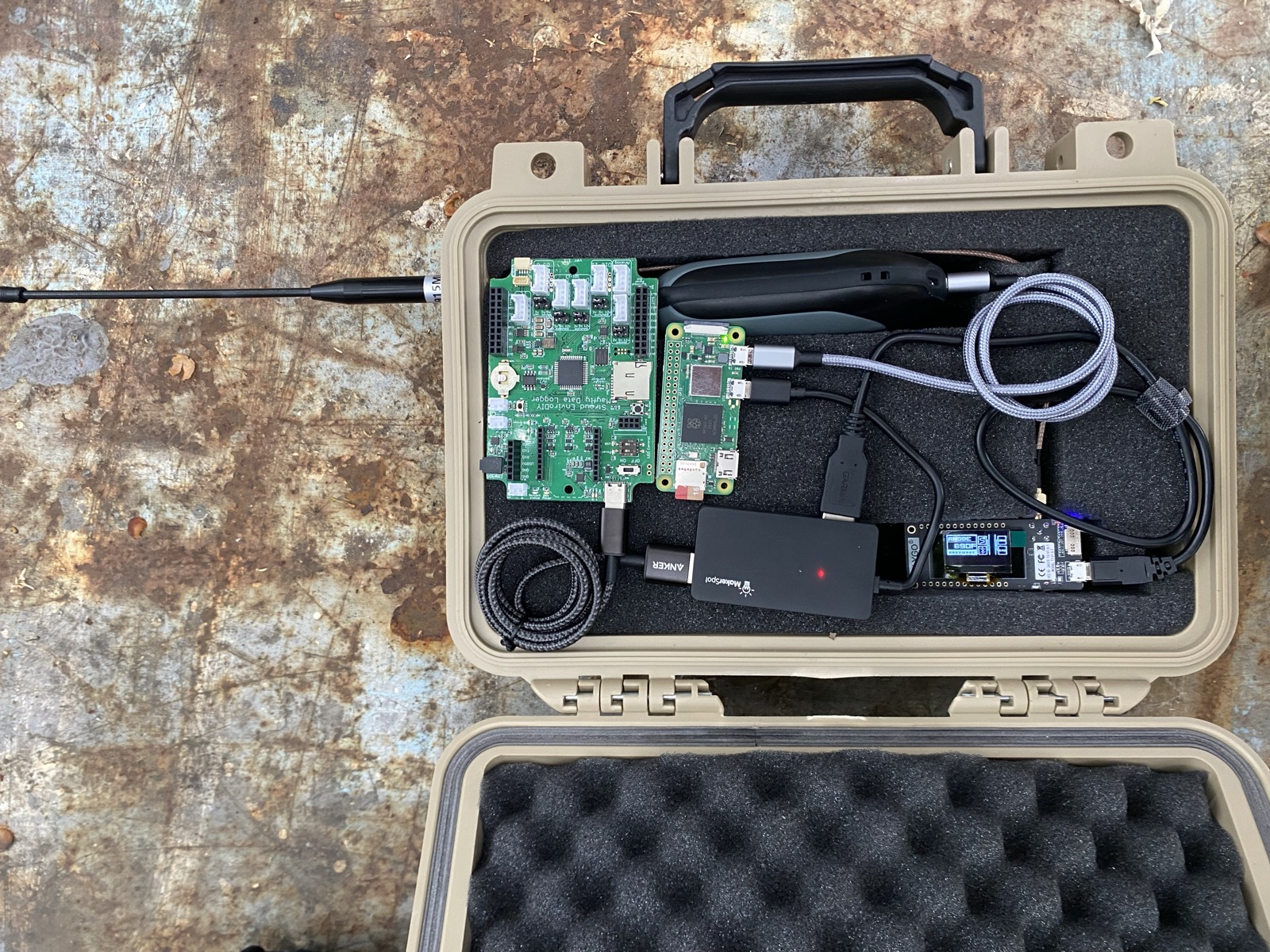
A Raspberry Pi Zero 2 W wired to a LILYGO LoRa radio with its antenna attached, sitting on a workbench. The Mayfly sensor board is not installed yet.
The first bench leaf, a Pi Zero 2 W and a LoRa radio. No Mayfly sensor board on it yet.

This is the smallest build, but it still runs the entire pipeline. A $7 thermometer feeds a Mayfly logger, your Pi encrypts each reading with AES-256-GCM, a LoRa radio carries it to your gateway, and it lands in a Google Sheet you own. A status LED blinks the whole time so you can watch it working. It runs on USB wall power, so there is no solar, no enclosure, and no soldering.

This is the build that teaches you the system. Pinch the thermistor between your fingers for a minute and you should watch the next few readings climb in your spreadsheet.

You'll need
a laptop, a micro-SD reader, an afternoon

There is one rule before you start. Never power the radio without its antenna attached. The guide repeats this a few times because it really does matter.
Tier 2

The gateway

a Pi you supply + a ~$25 radio
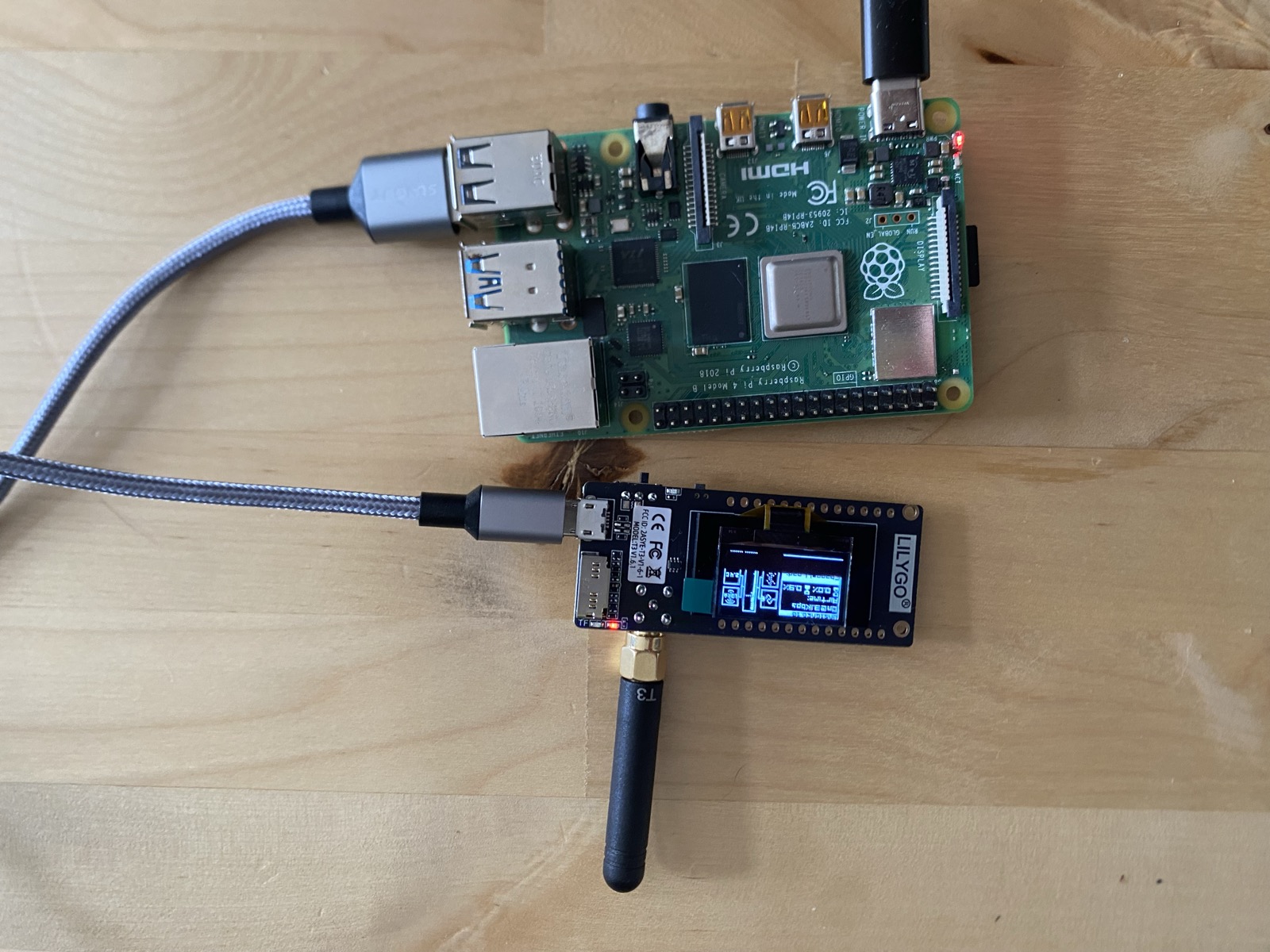
A Raspberry Pi 4 wired to a LILYGO LoRa radio with its antenna attached, sitting on a workbench.
The first gateway, a Raspberry Pi 4 and a LoRa radio.

A leaf on its own is just a sensor. A gateway is what turns it into a network. The gateway is a Pi you supply (a Pi 4 is what I test on, but a spare Pi Zero 2 W works too) plus the same $25 LoRa radio the leaf uses. It listens for encrypted readings over LoRa and forwards them to your destination over WiFi, behind a host allowlist and a per-sensor rate limit. It also announces itself so nearby leaves can find it. Once it is running, pair it with your bench leaf and you can watch a reading travel the whole way.

If you cut the gateway's power in the middle of a batch, the leaf buffers everything to disk and drains it once the gateway comes back. The failure drills in the repo run that exact sabotage for you.

Tier 3

The field node

not documented yet, on purpose

This is the solar-powered, weatherproof version. It uses a LiFePO4 battery, MPPT charging, an IP68 Pelican-style case, a pole mount, and a real SDI-12 sonde. The draft BOM comes to around $262 to $307 in parts, plus mounting hardware. I haven't run it through a full season of weather yet though, and I don't publish build guides for things I haven't built and broken myself first.

The design work is already public in the repo if you want to scout ahead or help test it. This section will become a real guide once the field trial is done, and the roadmap tracks where that stands.

Built a leaf and a gateway? Pair them →. It takes one shared identity hash and the two start talking to each other.

After the build

Your node's readings are yours, and so is the network you are growing. If you find a rough edge in a guide, that is a bug, so file it like one. If you built something I should know about, the same place works. There is no support tier because there is no product to support. There is just a repo, and now you are part of it.